

Environmental, social, and governance (ESG) investing has gone through a dramatic cycle over the past several years. What began as a niche concept evolved into one of the most powerful trends in asset management, attracting trillions of dollars in assets and reshaping how investors think about risk, opportunity, and long-term value creation. More recently, however, ESG has faced backlash, political scrutiny, and questions about its effectiveness.
Yet despite the noise, ESG investing remains highly relevant, with global ESG-related assets still measured in the tens of trillions of dollars.
What has changed is how ESG is being implemented. Today, investors are recognizing that ESG is far more complex than a checklist, and this is where active management comes in. As ESG evolves from a marketing label into a sophisticated investment framework, active strategies may offer the best way to capture its true potential.
ESG Is Still Relevant and More Nuanced Than Ever
The idea behind ESG investing has always been straightforward: companies that manage environmental, social, and governance risks effectively are better positioned for long-term success. Poor governance, environmental liabilities, or social controversies can destroy value, while companies that address these issues proactively can build durable competitive advantages. Data supports this thesis, with several major ESG indexes performing well and even outperforming the broader market.
This thesis remains intact. Climate transition risks, regulatory pressures, and shifting consumer preferences continue to shape corporate behavior, forcing companies to adapt through decarbonization efforts, supply chain improvements, or governance reforms.
On the investing side, pensions, endowments, sovereign wealth funds, and other large institutions have adopted ESG-first mandates for their investment decisions.
This combination has kept ESG investing just as relevant today as it was a decade ago.
The problem is that ESG is becoming more complex than simply tracking an index. Passive ESG investing typically relies on index-based approaches that screen companies by ESG scores or exclude certain industries. While this offers a simple, cost-effective way to incorporate ESG considerations, it comes with significant limitations.
First, ESG ratings can be inconsistent, as different providers often assign different scores to the same company, reflecting varying methodologies and priorities. Passive ESG strategies also tend to be backward-looking. Finally, index-based ESG strategies often produce unintended concentrations — many ESG indexes are heavily weighted toward technology companies, which tend to have lower carbon footprints, creating sector biases and reducing diversification.
These limitations highlight the need for a more flexible, forward-looking approach.
Why Active Management Works Better for ESG
Active management is uniquely suited to ESG investing because it allows for judgment, flexibility, and engagement.
At its core, ESG investing is about understanding how non-financial factors affect financial outcomes. This requires deep research, contextual analysis, and the ability to distinguish what matters from what does not.
Carbon emissions may be a critical issue for energy and industrial companies, but less relevant for software firms. Governance practices may be paramount in emerging markets, while labor practices could be more significant in consumer-facing industries.
Active managers can look beyond surface-level ESG scores to evaluate companies on a more granular level.
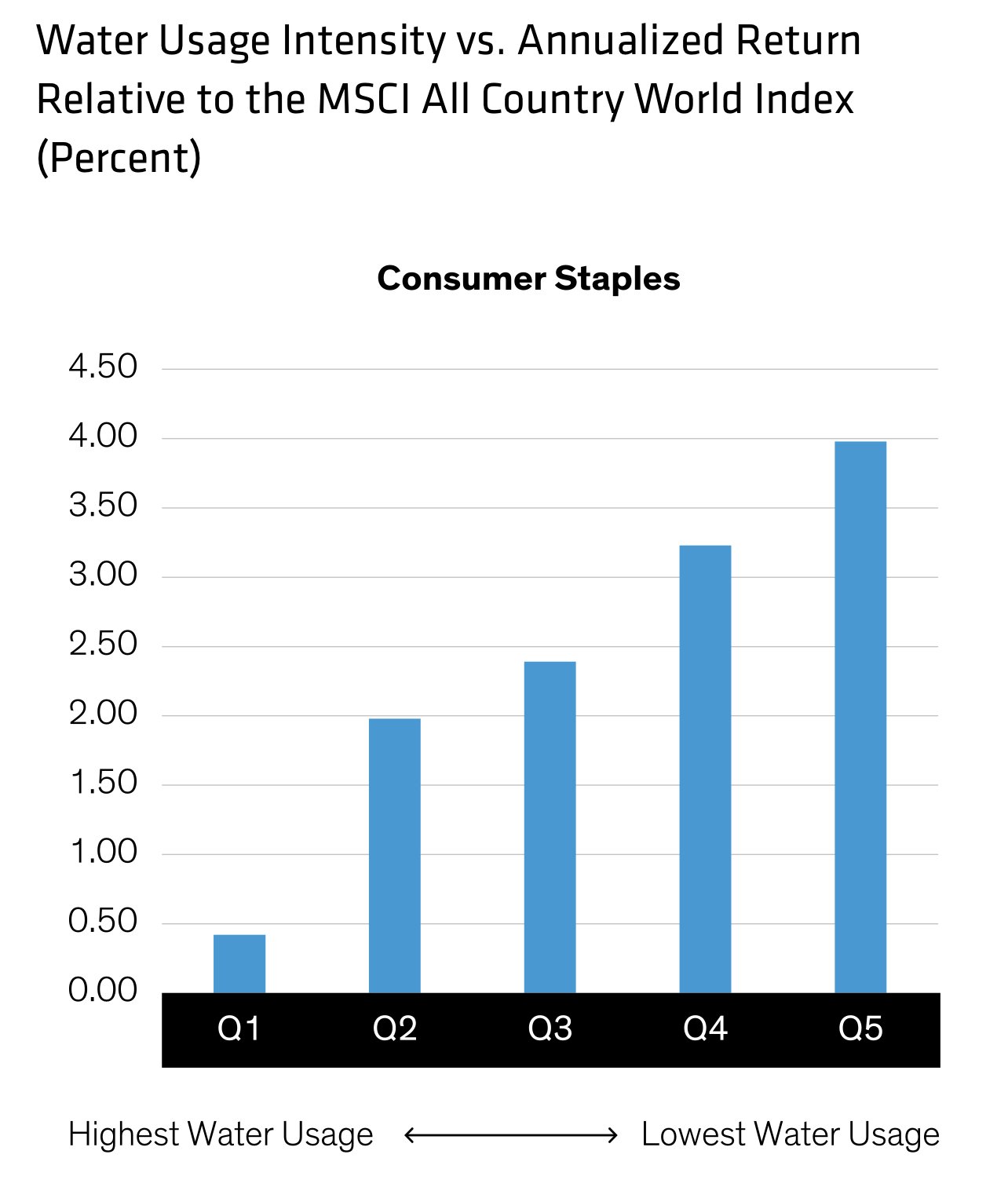
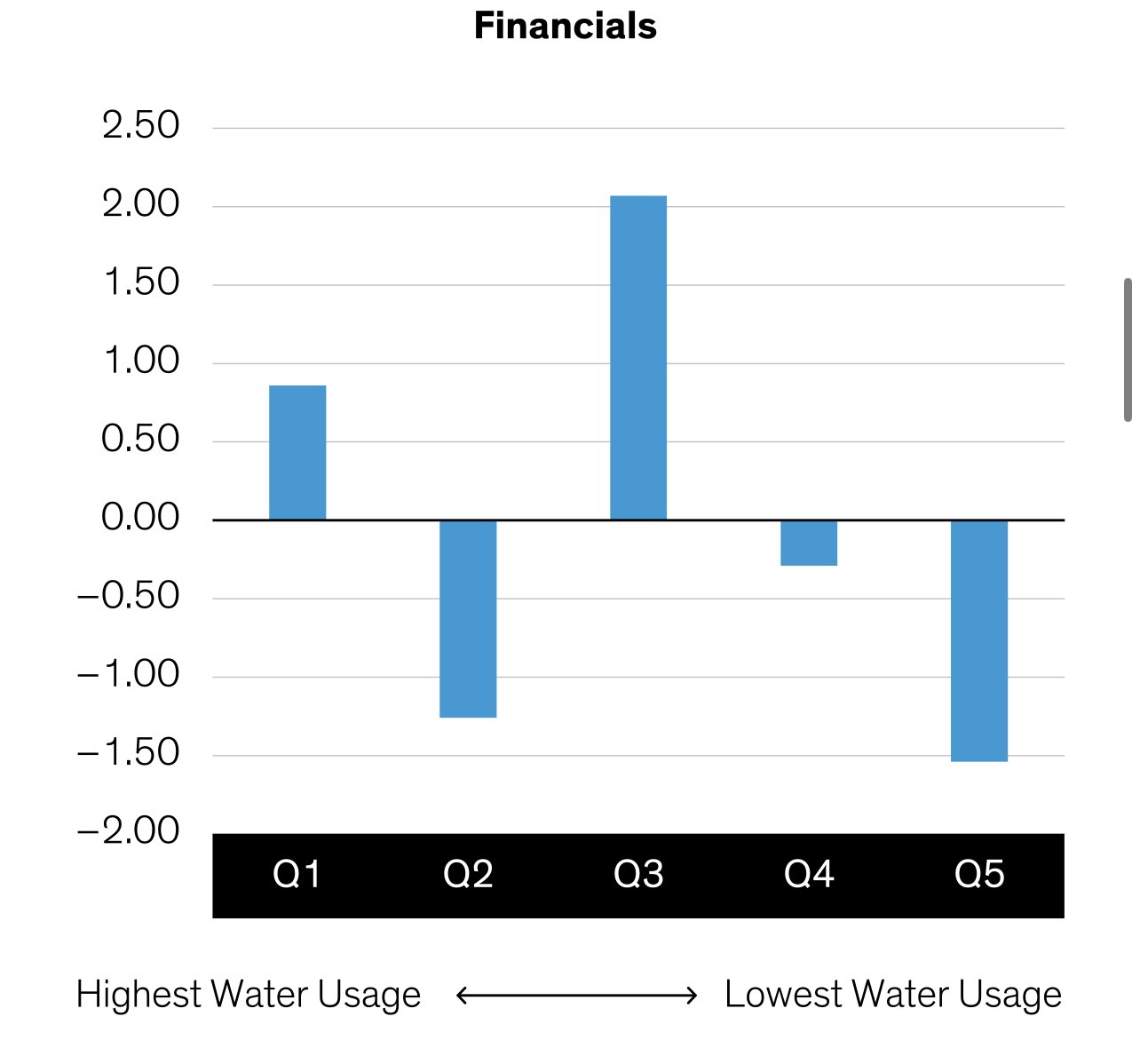
Take water usage as an example. The relevance of this ESG factor to excess returns varies considerably by sector, as this chart from a recent AllianceBerstein study illustrates.
Source: AB
This level of analysis enables active managers to identify opportunities that passive strategies may miss by isolating the factors that matter most to a particular sector and using them as a source of additional alpha. Governance has consistently been one of the strongest predictors of long-term performance, as companies with strong governance structures tend to allocate capital more effectively, manage risks better, and deliver more consistent returns. Yet the “G” in ESG is often underrepresented in passive indexing.
Active managers can also move beyond the backward-looking focus of index-based ESG. A company with poor current ESG scores but a credible improvement plan may represent an attractive investment, while a company with high ESG ratings but deteriorating fundamentals may pose hidden risks.
Another key advantage of active management is engagement. Active managers can interact directly with company management, advocating for changes that improve ESG outcomes and, ultimately, shareholder value. This engagement can take many forms, from voting on shareholder proposals to direct dialogue with executives. Despite facing political backlash in recent years, active engagement remains a powerful ESG tool.
How Investors Can Get Active with ESG
For investors looking to incorporate ESG into their portfolios, active strategies offer several pathways.
One of the most accessible options is active ESG ETFs, which combine the benefits of active management—such as research and flexibility—with the structural advantages of ETFs, including liquidity, transparency, and tax efficiency. Active ESG ETFs can implement nuanced strategies that go beyond simple exclusions, allowing for more targeted exposure.
Active ESG ETFs
These ETFs were selected for their low-cost, actively managed ESG exposure. Sorted by YTD total return, they range from 4.1% to 30%, with expense ratios between 0.2% and 0.65%, assets under management between $7M and $260M, and current yields between 0% and 4.2%.
| Ticker | Name | AUM | YTD Total Ret (%) | Yield (%) | Exp Ratio | Security Type | Actively Managed? |
|---|---|---|---|---|---|---|---|
| ESGY | American Century MSCI USA ESG Leaders Index ETF | $15M | 29.6% | 0.1% | 0.39% | ETF | Yes |
| ESGA | American Century Sustainable Equity ETF | $198M | 24.1% | 1% | 0.39% | ETF | Yes |
| QQMG | Invesco ESG NASDAQ 100 ETF | $88M | 19% | 0.42% | 0.2% | ETF | Yes |
| TEMP | JPMorgan Climate Change Solutions ETF | $7.3M | 16.6% | 1.3% | 0.49% | ETF | Yes |
| NWLG | Nuveen Winslow Large-Cap Growth ESG ETF | $10.5M | 12.1% | 0% | 0.65% | ETF | Yes |
| PLDR | Putnam Sustainable Leaders ETF | $260M | 7.6% | 0.4% | 0.59% | ETF | Yes |
| PCRB | Putnam ESG Core Bond ETF | $260M | 6.2% | 3.8% | 0.35% | ETF | Yes |
| EMNT | PIMCO Enhanced Short Maturity Active ESG ETF | $192M | 4.1% | 4.2% | 0.36% | ETF | Yes |
ESG investing is entering a new phase—one defined by greater sophistication, accountability, and integration. The early era of broad exclusions and simple scoring systems is giving way to more nuanced approaches that recognize the complexity of ESG factors.
In this environment, active management is likely to play an increasingly important role, as the ability to analyze, adapt, and engage will be critical to navigating the evolving ESG landscape.
At the same time, the ETF structure is making active ESG strategies more accessible than ever. Investors no longer have to choose between cost efficiency and active insight—they can have both.
Bottom Line
ESG investing is not disappearing—it is maturing. The focus is shifting from broad labels to meaningful impact and from static screens to dynamic analysis. In this new landscape, active management offers a clear advantage, and active ETFs are providing the right vehicle.
